Around the World in Eight Cocktails: The Official World Cup Watch Party Drink Menu
Eight countries. Eight drinks. Zero excuse for your watch party to lack thoughtful cocktails. Whether you're hosting friends, family, the whole neighborhood or a full bar, this is the tournament menu — one cocktail per contender, each finished with a garnish that holds up from opening whistle to extra time.
The World Cup only comes around every four years, which means the pressure on your bar program (or your kitchen counter) is roughly equivalent to a penalty kick in stoppage time. Everyone is watching. Someone is going to cry. It's imperative that the drink in your hand is complimentary of the high stakes.
We built this menu around eight countries you'll see making noise in 2026 — some obvious champions, some underdogs — and paired each with a specialty cocktail rooted in the actual bar culture of the country. Real drinks. Not fluorescent-colored punches with a paper flag stabbed into a lime wedge. Every recipe below is bartender-tested, bar-cart-friendly, and finished with a hand-dehydrated garnish that won't wilt during penalty kicks.

Cue the anthem. Pour the drinks. The Garnish Guide
🇧🇷Brazil
You cannot host a World Cup watch party without acknowledging the country with five stars on the crest. Brazil's national cocktail is the Caipirinha — cachaça, lime, sugar, muddled aggressively enough to wake the neighbors. We're taking the strawberry variant because it looks like a sunset over Copacabana and drinks like one too.

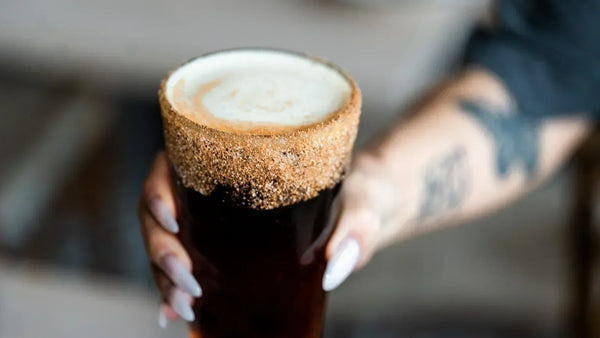
Featured Garnish: Strawberry Sugar Rimmer
All-natural strawberry powder blended with fine cane sugar. Rim it, sip through it, notice it in every pull.
Ingredients
- 2 oz cachaça (Leblon or Novo Fogo)
- 1 lime, quartered
- 4 fresh strawberries, hulled
- 2 tsp raw cane sugar
- CGC Strawberry Sugar Rimmer for the glass
Method
- Rim a rocks glass with Strawberry Sugar. Do not skimp.
- In a shaker, muddle lime, strawberries, and cane sugar until the fruit surrenders.
- Add cachaça and a generous scoop of crushed ice.
- Shake — briefly — then dump the whole thing straight into the rimmed glass.
- Serve with a short straw and the smug confidence of a Brazilian midfielder.
🇫🇷France
Les Bleus. Two-time champions in the last three tournaments. Their signature drink is elegant, effortless, and takes exactly twelve seconds to build — very French, very "I wasn't trying." A splash of crème de cassis, a pour of Champagne, one perfect wheel on the rim. If the game goes to penalties, this is what you want in your hand.
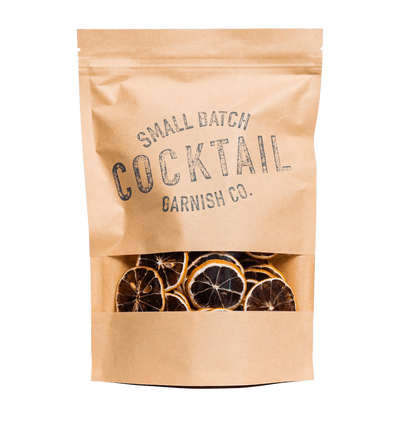
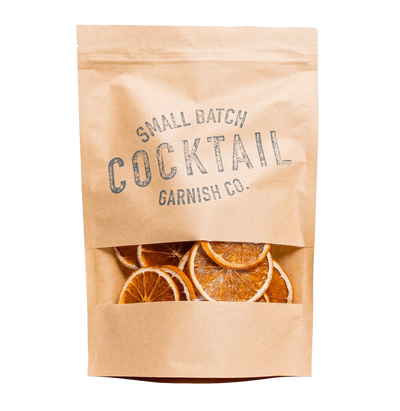
Featured Garnish: Dehydrated Lemon
Hand-sliced lemon wheels, dried low-and-slow to lock in oil and color. Floats. Doesn't brown.
Ingredients
- 0.5 oz crème de cassis (Lejay or Mathilde)
- 5 oz brut Champagne (or dry Crémant, if you're being practical)
- 1 dehydrated lemon wheel
Method
- Chill a flute or coupe. Cold matters here.
- Pour the cassis in first.
- Top slowly with Champagne — pour down the side, no foam.
- Float the lemon wheel on top. Serve without stirring.
🇦🇷Argentina
Argentina's most-consumed cocktail is, no exaggeration, a shockingly perfect ratio of one bitter Italian amaro and one American cola. It tastes like nothing and everything at once — herbal, cold, faintly medicinal in the best way. It's the drink that fueled Messi through Qatar.
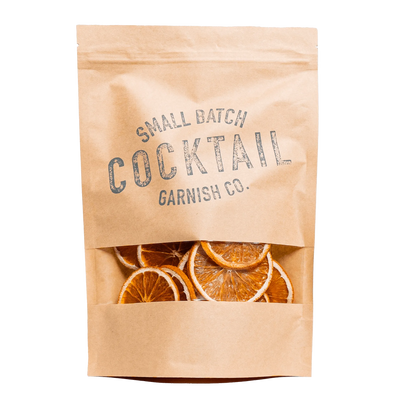
Featured Garnish: Dehydrated Orange
Deep amber wheels that mellow bitter amari and photograph like they were paid for it.
Ingredients
- 2 oz Fernet-Branca
- 5 oz cold Coca-Cola (glass bottle, not diet, do not argue)
- 1 dehydrated orange wheel
Method
- Fill a highball or a plastic cup (the traditional vessel) with ice.
- Pour Fernet first. Top with Coca-Cola.
- Stir once. Drop in the orange wheel. Do not overthink it.
🇵🇹Portugal
Portugal's national aperitivo is simple and classy: white port, tonic, ice, citrus. It's the drink Lisbon locals reach for the second the sun tips toward the Atlantic — light enough for a group stage matinee, refreshing enough to survive a knockout round in July heat. The Portuguese have quietly been doing this for a century while the rest of us pretended white wine spritzers were a good idea.

Featured Garnish: Dehydrated Lime or Lemon
Either works. Lime for a sharper aromatic; lemon for a rounder, prettier finish. We use both.
Ingredients
- 2 oz white port (Taylor Fladgate Chip Dry is the move)
- 4 oz premium tonic water (Fever-Tree Mediterranean)
- 1 dehydrated lime wheel or lemon wheel
- Fresh mint (optional but recommended)
Method
- Fill a wine glass with ice
- Pour white port over the ice.
- Top with tonic. Stir once, gently.
- Garnish with the citrus wheel and a mint sprig if you're feeling fancy.
🇲🇦Morocco
Morocco pulled off one of the great Cinderella runs in tournament history in 2022 and their bar culture deserves the same second look. Mahia is a traditional Moroccan fig-and-anise brandy that drinks like a cross between grappa and pastis — herbal, dry, strangely perfect over ice with fresh mint. If you can't find a bottle stateside, sub a good pastis (Ricard) or a young grappa. Nobody at the party will know.
Featured Garnish: Dehydrated Lime
Sharp, aromatic wheels that stand up to anise-forward spirits without turning muddy.
Ingredients
- 2 oz Mahia (or Ricard/Pernod as a stand-in)
- 0.5 oz fresh lime juice
- 0.5 oz simple syrup
- 6–8 fresh mint leaves
- Cold sparkling water to top
- 1 dehydrated lime wheel
Method
- Clap the mint between your palms and drop it into a highball glass.
- Add Mahia, lime juice, and simple syrup. Stir.
- Fill with crushed ice.
- Top with sparkling water. Garnish with the lime wheel.
🇲🇽Mexico
El Tri never misses a World Cup, and neither should a great mezcal. This Hibiscus Mezcal Margarita has notes of smoky mezcal, tart hibiscus, fresh lime, a whisper of agave. Deep magenta, floral, and just bitter enough to keep you honest through the first half. The hibiscus does double duty here: steep it into a syrup, then float a flower petals in the glass for the perfect finish.

Featured Garnish: Dried Hibiscus Flowers
The double-duty ingredient — steep it for syrup, float it in the glass. One bag pulls both jobs.
The Hibiscus Syrup (Make Ahead)
- 1 cup dried hibiscus flowers
- 2 cups water
- 1.5 cups white sugar
- 1 cinnamon stick
- Zest of 1 lime
- Bring water to a boil. Add hibiscus, cinnamon, and lime zest.
- Simmer 8–10 minutes until the water turns a deep magenta.
- Strain out the solids (save a few blossoms for garnish).
- Return the liquid to the pot, add sugar, and stir over low heat until dissolved.
- Cool completely. Store in a sealed bottle in the fridge — good for 3 weeks.
The Cocktail
- 2 oz mezcal (Del Maguey Vida or Montelobos)
- 1 oz hibiscus syrup (see above)
- 0.75 oz fresh lime juice
- 0.25 oz agave nectar (optional, to taste)
- Reserved hibiscus flower for garnish
- Shake mezcal, hibiscus syrup, lime juice, and agave hard with ice.
- Strain over fresh ice in a rocks glass (rim with salt if you're feeling it).
- Float a rehydrated hibiscus flower on top. It will bloom in the glass.
🇧🇪Belgium
Before there was gin, there was jenever — and Belgium has just as strong a claim to it as its neighbor to the north, with the Hasselt and Flanders distilleries pouring it for centuries. It's malty, softer than London Dry, and drinks like whiskey's more interesting cousin. The traditional pour is called a kopstootje — "little head-butt" — a chilled shot of jenever alongside a beer, and nobody does beer like the Belgians. We've dressed it up just enough to belong on a watch-party menu.
Featured Garnish: Dehydrated Lemon
Cuts the malt on a jenever pour. Also works if you talk yourself into a proper cocktail build.
Ingredients
- 1.5 oz young jenever (Bols or Rutte), chilled
- 0.5 oz fresh lemon juice
- 0.25 oz honey syrup (equal parts honey + hot water, cooled)
- 3 oz cold Belgian pilsner (Stella Artois, naturally) on the side
- 1 dehydrated lemon wheel
Method
- Stir jenever, lemon juice, and honey syrup with ice until deeply chilled.
- Strain into a chilled coupe or short tulip glass.
- Rest the lemon wheel on the rim.
- Serve alongside a small glass of cold pilsner. Sip. Sip. Then sip again.
🏴England
England's contribution to cocktail history is real and it is spectacular: gin, lime, done. The Gimlet was invented aboard Royal Navy ships in the 19th century to keep sailors from getting scurvy, which is arguably the most useful cocktail origin story on the books. This is the drink you serve when the group stage runs long, when the tempo is drifting, when someone starts talking about xG. Cold. Bracing. Immediate.
Featured Garnish: Dehydrated Lime
The only garnish for a Gimlet. Anything else is a garnish for a different drink.
Ingredients
- 2.5 oz London Dry gin (Beefeater, Tanqueray, Sipsmith)
- 0.75 oz fresh lime juice
- 0.5 oz simple syrup
- 1 dehydrated lime wheel
Method
- Shake gin, lime juice, and simple syrup hard with ice — at least 12 seconds.
- Double-strain into a chilled coupe.
- Float the lime wheel. Serve immediately.
How to Actually Host a Watch Party That Doesn't Fall Apart at Halftime
A few field-tested rules from bartenders who've worked more sports-day shifts than they can count:
Pre-batch two crowd drinks. Pick the Caipirinha and the Porto Tônico. Batch them by the pitcher and let people self-serve. This frees you up to actually watch the game.
Set up a garnish station. Small bowls, big impact. Lay out lime, lemon, orange, and hibiscus at the bar and let guests build their own — the CGC 3-Pack Bundle covers three of the four for you.
Ice matters more than the alcohol. Buy twice what you think you need. There is no watch party in the history of watch parties that has run out of tequila before running out of ice.
Save the fancy drink for a knockout round. The Kir Royale is a moment. Don't waste it on group stage.
Every Garnish On This Menu
Lime · Lemon · Orange · Hibiscus · Strawberry Sugar Rimmer · The 3-Pack Bundle
Dehydrated Lime
From $9.97
Dehydrated Lemon
From $9.97
Dehydrated Orange
From $9.97
Dried Hibiscus
$14.00
Strawberry Sugar
$11.00

3-Pack Bundle
From $44.00
Frequently Asked Questions
What are the best cocktails for a World Cup watch party?
Pick drinks tied to the countries you're rooting for and lean on ones that batch or build in seconds. Our go-to eight for World Cup 2026: the Strawberry Caipirinha (Brazil), Kir Royale (France), Fernet con Coca (Argentina), Porto Tônico (Portugal), Mahia & Mint (Morocco), Hibiscus Mezcal Margarita (Mexico), Jenever (Belgium), and the classic Gimlet (England). Finish each with a dehydrated citrus wheel so the garnish doesn't wilt before halftime.
How do I host a World Cup watch party at home?
Pre-batch one or two crowd drinks (the Caipirinha and Porto Tônico are ideal), set up a small self-serve garnish station with dehydrated lime, lemon, and orange, and buy twice as much ice as you think you'll need. Save any labor-intensive drink (the Kir Royale, for example) for the knockout rounds when the room is paying attention.
What is Brazil's national cocktail?
The Caipirinha — cachaça muddled with fresh lime and sugar. Serve it in a rocks glass over crushed ice. The strawberry variation we use for watch parties rims the glass with all-natural CGC Strawberry Sugar and adds fresh muddled berries for color and depth.
What do people drink in Argentina during matches?
Fernet con Coca — a 1:3 ratio of Fernet-Branca and Coca-Cola, served over ice. It is genuinely the most consumed cocktail in the country, particularly during football matches. Garnish with a dehydrated orange wheel to soften the amaro's bitterness.
Can I batch these cocktails ahead of the match?
Yes — most of them. The Caipirinha (multiply the recipe, muddle in a punch bowl), Porto Tônico (mix port + tonic in a pitcher at the ratio, add ice to serve), Hibiscus Mezcal Margarita (make the hibiscus syrup ahead, then batch and shake to order), and Mahia & Mint all batch beautifully for a crowd. Skip batching the Kir Royale and Gimlet — Champagne goes flat and shaken gin cocktails lose their texture within minutes.
Why use dehydrated garnishes instead of fresh?
Dehydrated citrus wheels and dried botanicals hold their color, shape, and edge for hours — perfect for a garnish station that sits out through 90+ minutes of play plus extra time. No wilting, no browning, no soggy rims. They also carry more intense aroma than fresh fruit because the drying process concentrates the essential oils.
What garnish do I need for a hibiscus mezcal margarita?
A single dried hibiscus flower floated on top. The flower rehydrates in the drink and blooms open in the glass — it's a functional garnish (same botanical that flavored the syrup) and the most photogenic finish on the entire menu.
What can I substitute for Mahia if I can't find it?
Mahia is a traditional Moroccan fig-and-anise brandy that's tough to source in the U.S. Substitute a French pastis like Ricard or Pernod, or a young grappa. The anise character is what matters — nobody at your watch party will notice the swap.
How much alcohol do I need for a watch party?
Rule of thumb: 2 drinks per guest for the first hour, 1 drink per guest for each hour after. A 90-minute match with pre- and post-game hang averages 3–4 drinks per person. One 750ml bottle of spirits yields roughly 16 cocktails, so plan accordingly and always buy one extra bottle of the batch drinks.
Are there non-alcoholic World Cup drink options?
Yes — nearly every drink on this menu has a zero-proof version. The Hibiscus Mezcal Margarita is easy to adapt: skip the mezcal and top the hibiscus syrup with sparkling water and fresh lime for a bright, ceremonial mocktail. The Porto Tônico can be built with a non-alcoholic aperitivo instead of white port, and any drink garnished with a dehydrated citrus wheel looks identical in photos whether it's booze or not.
Ninety minutes. Eight countries. One trophy. Pour accordingly. The Final Whistle
Rate this guide
5.0 out of 5 · 1 rating
Thanks — rating recorded.